
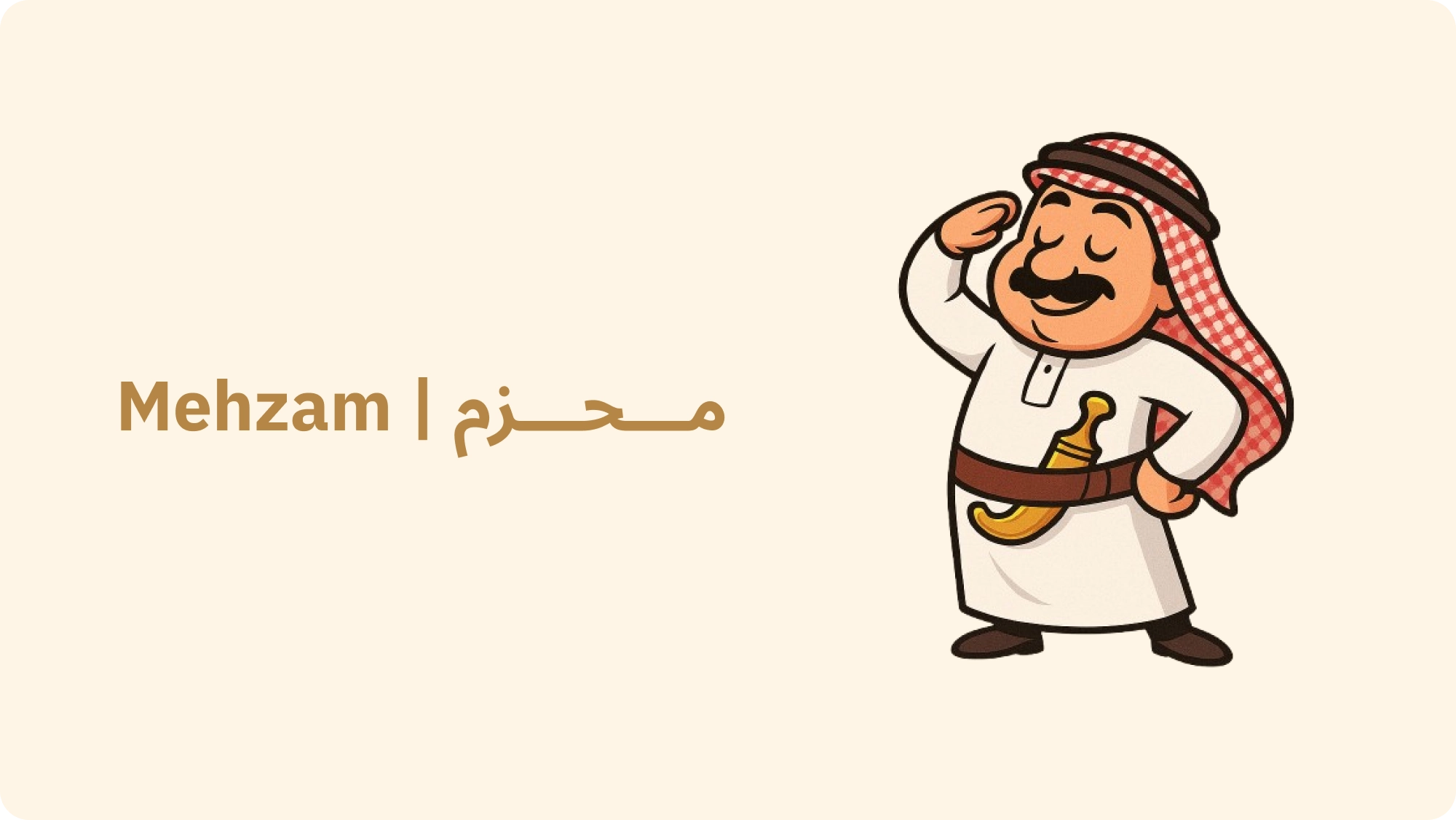
I’ve always been a skeptical shopper. I have this constant urge to find the best product at the absolute best price, but the journey through e-commerce stores often leaves me with a sense of uncertainty. Is this discount actually real? Or did the seller simply hike the "original" price yesterday to create the illusion of a bargain today? This wasn't just personal paranoia; it was a realization that we, as consumers, lack price transparency and a collective memory. I felt we needed a tool to end this doubt—something grounded in historical data that doesn't bend to the seller's whims. That is how Mehzam was born.
.png)
Identity & Branding
The name "Mehzam" wasn't a random choice. In our culture, the Mehzam—the traditional belt used to carry a dagger—is a powerful symbol of support, readiness, and having someone’s back. I wanted this tool to be that reliable companion for the shopper, ensuring they are always protected from financial deception. Believing that design is the primary language of trust, I created a character rooted in Saudi heritage: a friendly figure in traditional attire. But he wasn't just a static icon; he evolved with the user through a gamification system. Users level up from a "Bronze Ally" in simple gear to a "Royal Ally" seated on a throne in a formal Bisht. This progression wasn't just for aesthetics; it was a way to humanize the tech, turning the mundane task of data collection into a rewarding social journey.

The Strategy
Technically, I had two paths for data collection: build an army of web-scraping bots—which is expensive and prone to IP bans—or lean into Passive Crowdsourcing. I chose the latter. I didn't want to sink a massive budget into infrastructure before validating the actual market need. Instead, I made the extension the engine; as users browse, Mehzam silently and anonymously logs prices.
.png)
The real challenge was the "Cold Start" problem: what do we show the very first person to view a new product? I solved this with humor. If you were the first to "discover" a price, a witty local proverb would pop up: "We brought you here for help, but it turns out you’re the one helping us!" This wasn't just a cost-saver; it was a test of the community’s willingness to build a shared defense against unfair pricing.

The Pivot: Lessons Learned
Today, Mehzam’s servers are dormant, but the lessons I gained are more active than ever. I realized that building a beautiful, functional product is only 20% of the battle; the remaining 80% is the Growth Engine. Marketing through my personal channels wasn't enough to reach the "critical mass" needed to make the database instantly valuable for every newcomer.

I made the conscious decision to pause development because, in the world of products, failing to reach a market is just another form of high-value data. Mehzam was my laboratory; it proved I could fuse engineering, cultural storytelling, and human psychology. It wasn't just a Chrome extension; it was a defining step in my journey to understand how we build things people truly need and trust.